
We combine agile methods with individual software development and rely on clear processes, iterative implementation and measurable results for sustainable digital solutions.


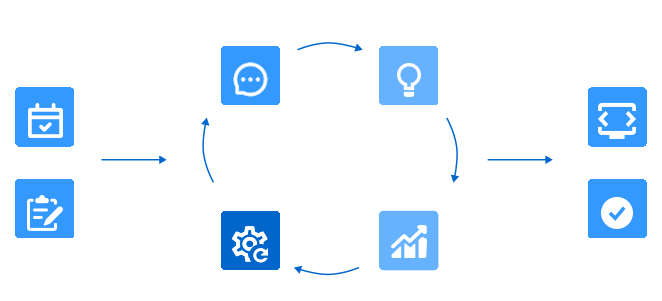
Agile methods describe modern process models in software development, in which projects are implemented in small, iterative steps. Instead of rigid planning, the focus is on flexibility, transparency and continuous adjustment.
Agile software development makes it possible to test requirements at an early stage, incorporate feedback and dynamically further develop projects.
Regular coordination with stakeholders reduces adverse developments and increases quality. These feedback loops are a central part of modern iterative software development.
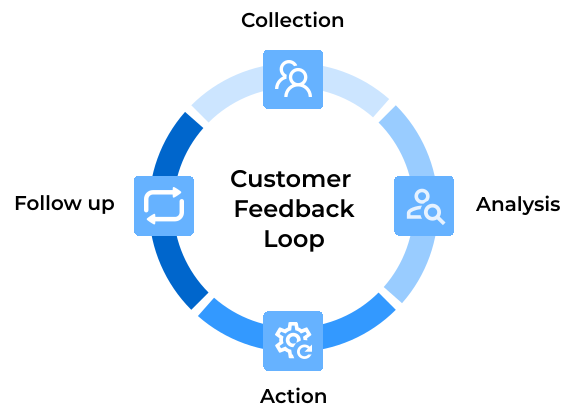
Companies must be able to react quickly to changes — rigid development processes are often too slow.
The more complex a system, the more important iterative development cycles are.
Instead of rigid project phases, we rely on a step-by-step, learning approach. Short cycles and transparent prioritization enable flexible, early validated solutions.
Requirements are continuously assessed and prioritized.
Functions are created in clearly defined iterations and are implemented, tested and optimized step by step.
In this way, development goals can be flexibly adjusted and risks can be controlled at an early stage.
Regular reviews and structured test cycles accompany every development phase. Errors and optimization potential are identified early on before they have an impact on the entire system.
This creates stable software quality and long-term maintainability.
Agile process models develop their full potential particularly in individual software development, as requirements here are often complex and dynamic.
Agile teams flexibly adapt functions and priorities to new conditions. In combination with Individual Software Development solutions are created with a high level of technical accuracy.
Continuous coordination ensures that technical implementation and business goals remain closely linked. Structured Project Management creates clear responsibilities in the process.
Existing applications can also be iteratively improved. About targeted Software Modernization quality, performance and maintainability are sustainably increased.
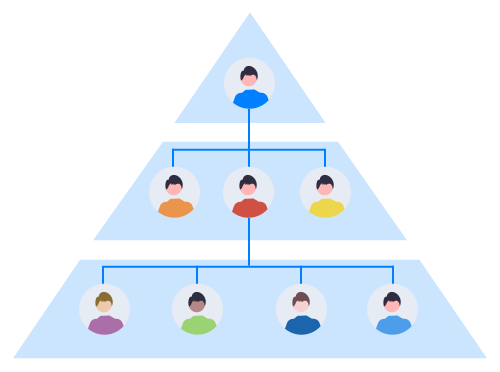
Development, department and management work closely together and make decisions based on common goals.
Clear status updates, structured reviews and regular reconciliations create reliability over the course of the project.
Short development cycles, clear prioritization and continuous quality assurance ensure predictable progress.
Would you like to check how Agile Methods can make your software project more transparent, flexible and predictable? In a non-binding discussion, we analyse your requirements and show what an iterative implementation could look like in your specific project context.
Modern business software based on C# and .NET — scalable, high-performance and future-proof. We develop individual backend and web solutions for sustainable system architectures.
Agile methods develop their potential particularly in complex ERP projects. Through step-by-step implementation and transparent prioritization, systems are created that adapt precisely to your business processes.
Would you like to learn more about agile process models or specific implementation options? Let us check together how we can implement your project in a structured and iterative way.
Get an offer


