
While individual documents can often still be checked manually, anonymizing large amounts of data requires new approaches. As volumes grow, scale, repeatability, and profitability are becoming critical factors in processing and sharing data.


As the volume of data increases, not only does the effort increase, but also the risk of errors, inconsistencies and incomplete anonymization.
Consistent treatment of identical information across all data sets is critical to reduce risks and ensure consistent results.
The same information must be treated identically in all data sets in order to avoid re-identification risks and ensure comprehensible results.
Beyond legal risks, cost and efficiency are key considerations. Organizations that scale must design processes efficiently and avoid the costs associated with errors.
Large amounts of data tie up employees for extended periods and cause significant manual effort. Capacity becomes scarce if anonymization doesn't keep pace with the growing data volume.
Subsequent corrections, re-examinations, and delays increase overall costs and significantly burden projects. Furthermore, there are potential legal consequences or sanctions if data protection requirements are not met.
Automation can quickly pay off as soon as data volumes, requirements for consistent processing or the need for verifiable quality certificates increase and manual processes reach their limits.
Scaled data processing reinforces known risks and adds new ones. Consistent application of rules and clear transparency about processed content is crucial.
Inconsistent processing stages, high time pressure, or a lack of binding standards promote gaps in the process and lead to inconsistent and difficult-to-understand results.
As the volume of data increases, it is more likely that seemingly harmless individual pieces of information will be combined together and that conclusions can be drawn about individual people.
Without a central overview, there is no evidence of which data has been processed and where risks remain.
Every day, a medium-sized company processes numerous documents containing sensitive information, including reports, presentations and internal evaluations. The documents are used internally and regularly passed on to external bodies.
The anonymization is mostly done manually. Content is redacted, processes differ from department to department and there is no uniform control. As the volume of documents grows, time and uncertainty increase.
Even minor errors can result in information remaining reconstructable. The result is inconsistent results, high manual effort and uncertainty in recurring processes and large amounts of data.
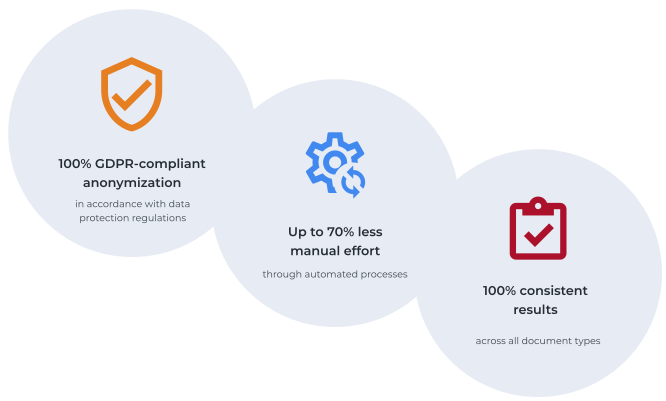
Automated anonymization standardizes processes, technically removes sensitive data and ensures consistent, verifiable results — regardless of document type.
Not all data processing requires an automated solution right away. However, certain criteria clearly indicate a need for action.
When the volume grows steadily, a scalable solution becomes an indispensable prerequisite for stable processes.
Evidence, standards, and repeatable results are not optional for large datasets.
Automation reduces marginal costs per document and creates predictability for teams and budgets.
Would you like to determine which level of automation is appropriate for your data volumes? Explore the demo or request a personal consultation.
Get a general overview of data protection and the most important requirements of the GDPR.
Would you like to learn more about use cases, document types or the use of Project A? Get in touch with us — we will give you individual advice and show you the appropriate next steps.
Receive an offer


